Curiosity Compass 360
•
13th December 2024
Creative Writing Tips for Kids & Teens: How Cutting Filters from Your Draft Sharpens Sensory Details
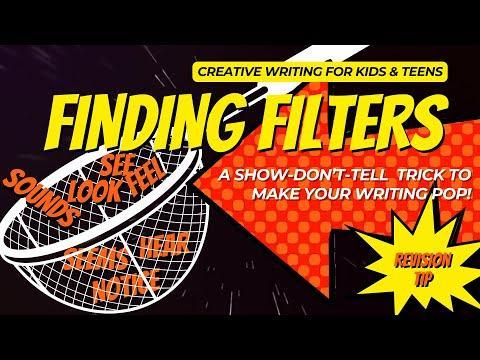
Learn how to write show-don't-tell sentences that crackle and grab or sparkle and snap in this Descriptive Writing BootCamp video. This sentence-level revision explainer will walk you through a powerful strategy for cutting repetition, sharpening sensory descriptions, and clarifying meaning called "Finding Filters."
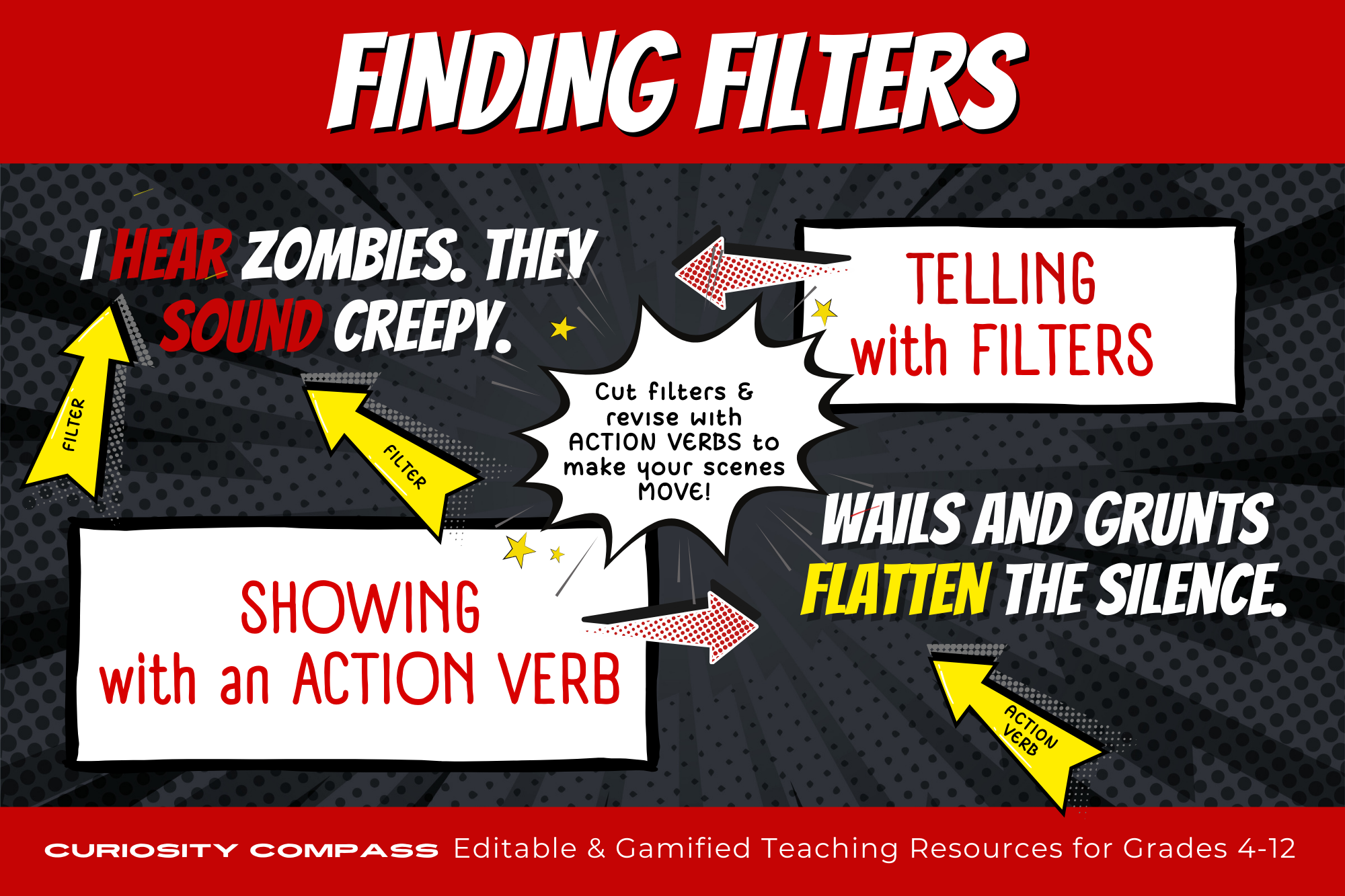
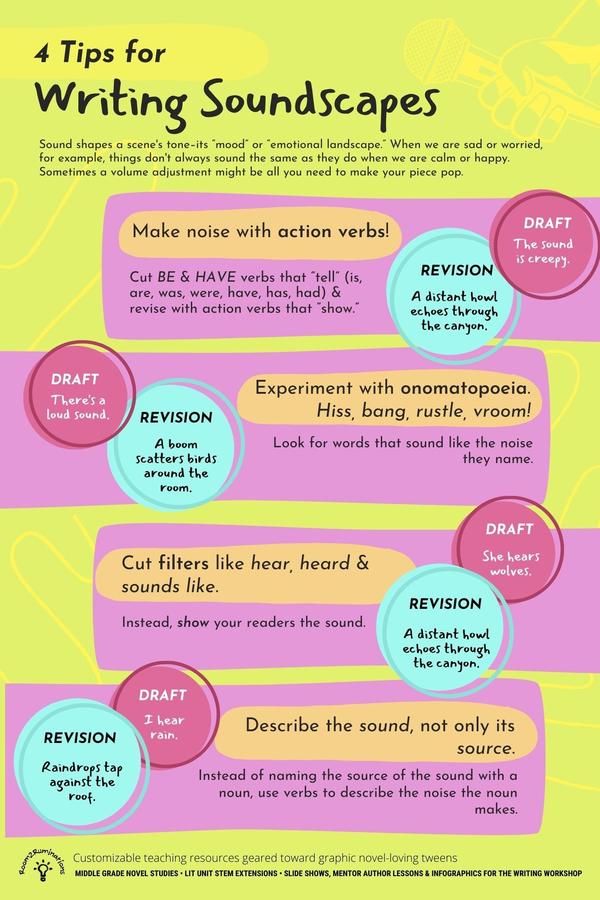
One way to transform sentences that "tell" into descriptions that "show" is to weed out sensory filters – verbs like "see," "hear," "notice," or "feel." Words like these block readers from experiencing the sights, sounds, smells, tastes, and tactile sensations of the real or imagined worlds you write about.
This video shows the step-by-step transformation of several "filtered" descriptions like...
She sees birds in the alley.
...from "telling" sentences into vivid descriptions that “show” like ...
Birds flap and squawk in the alley.
Whether you’re writing action-packed adventure, blood-spattered horror, or a subtle and nuanced portrait of frenemies, getting a feel for finding filters and developing an understanding of the power of precision will make your slasher script bleed, your thriller explode, and your fantasy mesmerize. We'll walk through examples and revision tips to help make your fiction, memoir, script, TV series, poem, song lyric, or video game narrative pop.
COMPANION TEACHING RESOURCES
If you're an educator looking for teaching resources to pair with this video, check out FINDING FILTERS: A Descriptive Writing, Revising & Editing Show-Don't-Tell Anchor Chart Set & Quizizz Game
PURCHASE LINK: https://www.teacherspayteachers.com/Product/FILTERS-Descriptive-WritingRevisingEditing-Show-dont-tell-Anchor-Chart-Game-7935927
Resource Components & Features
• 2 comic-style anchor charts about finding & cutting sensory filters that "tell" and revising with action verbs that "show." One of the anchor charts is a scene from this video.
• Links to 12 x 18-inch versions of the charts you can print as posters.
• A link to an interactive class game on Quizizz designed to reinforce concepts introduced in the anchor charts with prompts that ask students to experiment with the revision strategy in sentences of their own.
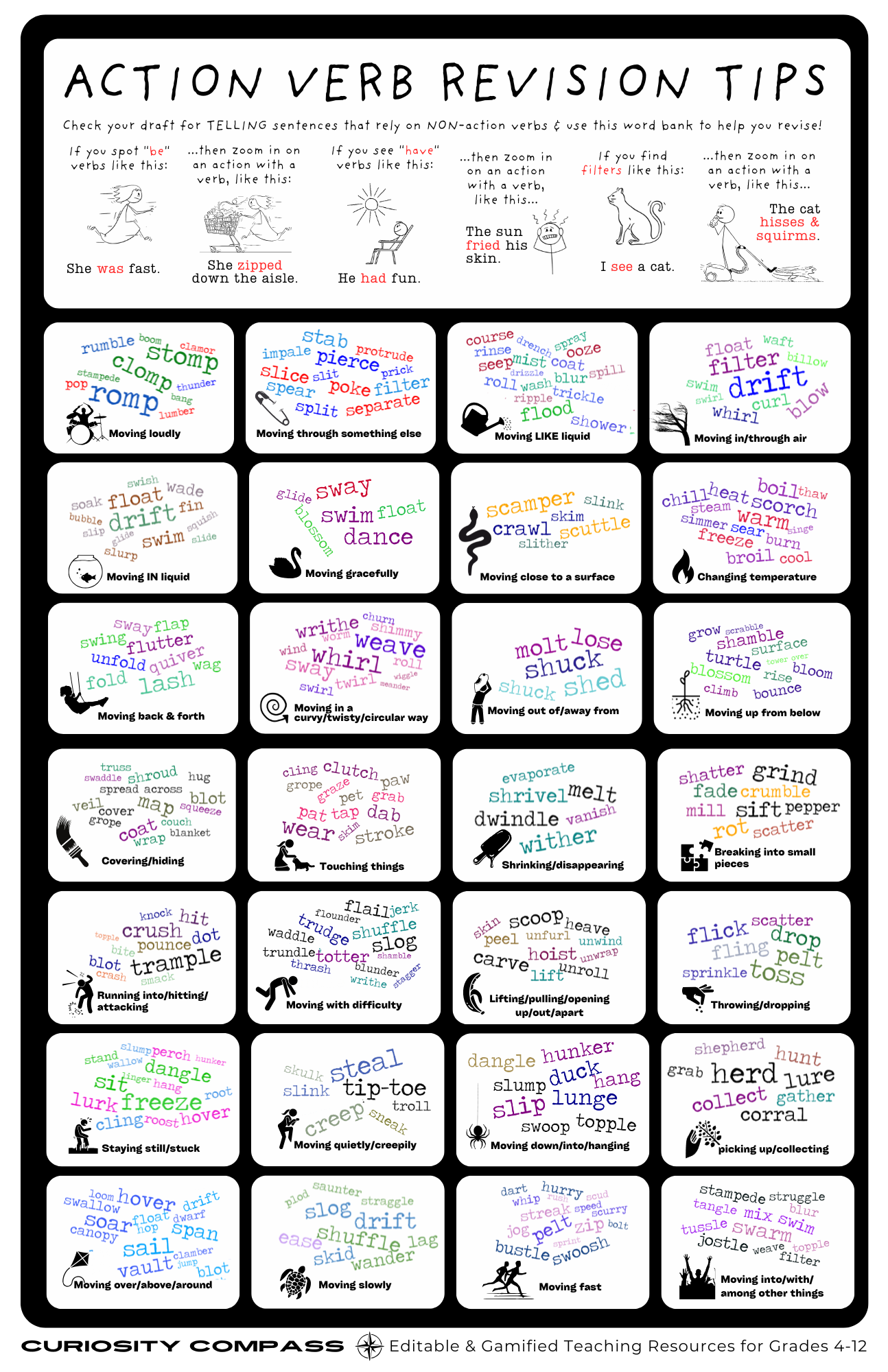
If you're looking for an ACTION VERB word bank, check out VERBS: THEY MOVE YOU, AN ACTION-PACKED WORD BANK
PURCHASE LINK: https://www.teacherspayteachers.com/Product/Verb-Word-Bank-Descriptive-WritingShow-Dont-TellPart-of-Speech-Anchor-Chart-5181261
Power precise and dynamic descriptions by steering the young writers in your class away from "be" and "have" verbs that tell and toward action verbs that show with this editable digital and printable 350+ verb word bank for use as a writing, revising, and editing practice tool.
This part of speech anchor chart and word bank helps students transform static sentences reliant on "be," "have," and filtering verbs (like "seems" and "looks") into vivid revisions like this one:
DRAFT: The weather is terrible.
REVISION: Rain slapped the windows.
Designed to generate dynamic, show-don't-tell storytelling, this resource's eye-grabbing word clouds and quick-guide icons engage students visually, facilitating experimentation with familiar verbs, guiding searches to pinpoint compelling language, and encouraging an exploration of the power of precision.
This revision scaffold includes:
• An editable, 2-page chart listing vivid verbs that describe 28 common actions (moving loudly, moving gracefully, moving up from below, moving like liquid, etc.)
• A poster/anchor chart version of the chart — featuring a unique word cloud and icon for each of the 28 action categories –– available to print in the following sizes and formats:
• An 18 x 24-inch color poster
• An 11 x 17-inch color poster
• An 11 x 17-inch grayscale, ink-saving poster
• As two 11 x 8.5-inch pages
• A sentence-level editing and revising practice activity that provides a series of “telling” sentences students are asked to revise as “showing” sentences, also available as an editable class game on Quizizz.
• A link to an explainer video about how action verbs are key to writing vivid sensory details: Show Don't Tell: Writing Sensory Details, a Guide for Young Authors. https://www.youtube.com/watch?v=4U0FWZPg-lA&list=PLkavWR2YHu86-k1KAhofoGf-WvYkxotxx&index=1